
A co-founder of popular neuroscience major, she ‘failed at retirement’ and keeps advising
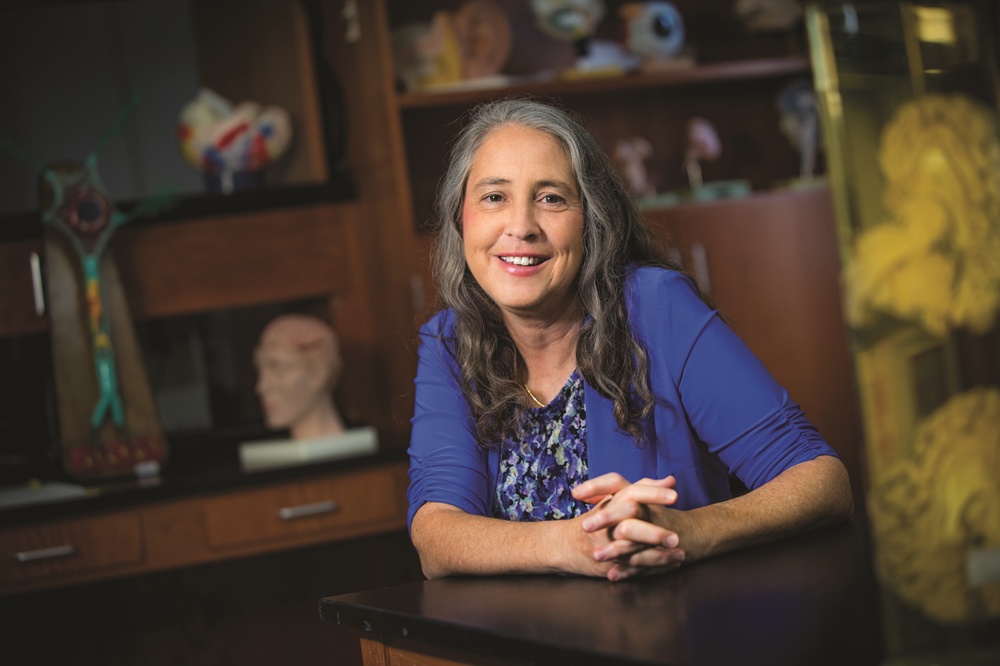
Photo by: Tulane University, Paula Burch-Celentano
Neuroscience is one of Tulane’s most popular undergraduate majors, graduating more than 100 students a year. The Tulane Brain Institute gave the program its home — and Beth Wee, who helped found the major in 2000 and has spent her career teaching its students, helped shape what it has become.
“By the time the Brain Institute came along, we already had this beautiful pipeline,” Wee said. “Undergrads, master’s students, PhDs. We were educating students at every level. The Brain Institute finally gave that work a clear home and a bigger stage.”
Wee likes to joke that she “failed at retirement.” She officially stepped down from her administrative roles in 2025, but unofficially, she’s still advising students and talking neuroscience every chance she gets.
“I always tell students, it’s not rocket science, but it is brain science,” she said with a grin. “You need the brain to run everything else. How is that not the coolest thing in the world?”
Tulane’s neuroscience education footprint started with a PhD program in 1986. The undergraduate major followed in 2000, launched by Wee along with professors Gary Dohanich and Jeff Tasker.
“Gary, Jeff and I kept seeing students trying to piece together psychology and biology on their own,” Wee said. “We finally said, ‘this needs to be a major. They deserve a real home in neuroscience.’” The master’s program followed in 2004, completing the full spectrum of neuroscience education at Tulane.
Wee describes the Brain Institute as a three-legged stool: research, education, and outreach. “The education leg supports the other two. The research labs rely on our students, and the outreach is driven by those same students taking neuroscience into the community.”
The interdependence runs deep. Undergraduates and master’s students work in research labs across campus, while PhD students often serve as teaching assistants in undergraduate courses. “If you took the undergrads and grad students out of those labs, a lot of the research simply couldn’t get done,” Wee said. “Education isn’t separate from research here. It’s the engine that keeps it going.”
The outreach leg of the stool is also student-driven. “They go into K-12 schools, they work with stroke survivors,” she said. “Our students are out there explaining brain science in plain language. It’s good for the community, and it’s transformative for the students.”
The leadership of the undergraduate and master’s programs now belongs to Sara Clark (NC ’03, SSE *10), a former master’s and PhD student in the program. “I love that Sara came through our own pipeline. She’s living proof that this ecosystem works.”
For Wee, the major’s success comes down to flexibility. “Our major is rigorous, but it’s not rigid. That's important. A lot of our students are pre-med or headed for other health professions. With neuroscience, they can complete most of their requirements, do research, maybe even study abroad, and still graduate on time. We work with athletes on lab schedules, we work with students who want to double major or go abroad. Our philosophy is: how do we help you accomplish your goals, not how do we make you fit into our box?”
But what truly sets the Brain Institute apart, she said, is its culture. “We really do like each other. Faculty go to lunch together. Labs collaborate. Grad students move between labs. It sounds simple, but that collegiality is the roux of our gumbo — the foundation that holds everything together and gives it flavor.”
That sense of connection extends to alumni who email and drop by years later. “I hear from students 10 years out who still think of their research lab as family,” Wee said. “They remember not just Tulane, not just neuroscience, but the specific lab, the mentor, the team. That’s the kind of impact you hope for when you go into education.”
