
The institute’s collaborative model helped land a $14 million grant on estrogen and brain health.
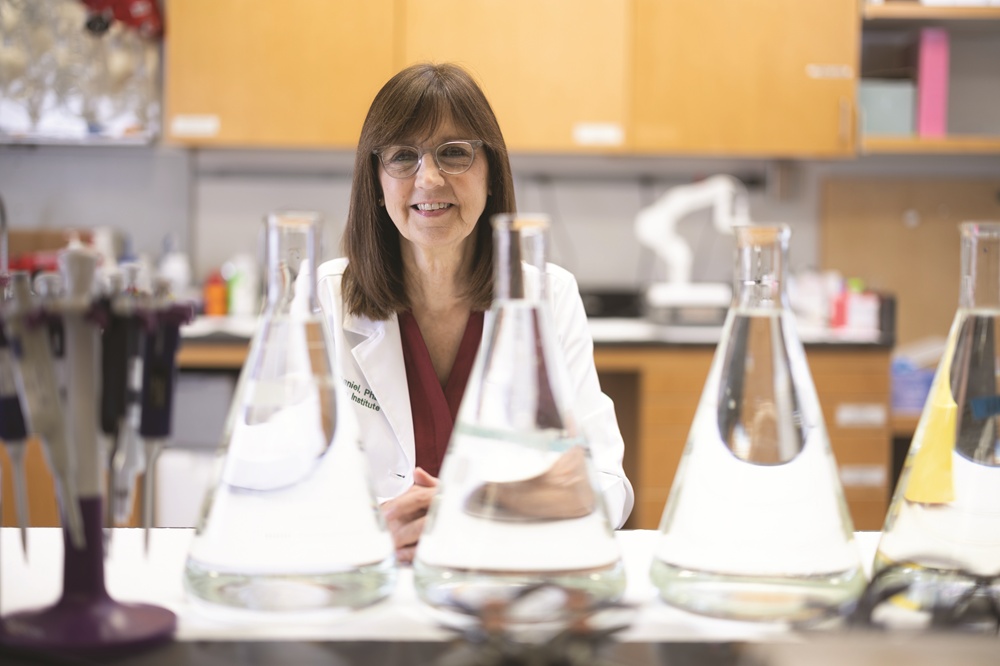
Photo by: Tulane University, Rusty Costanza
It was over a decade ago, and the time was right. Neuroscience had grown into one of Tulane’s most popular undergraduate majors, but it had no institutional home. Interdisciplinary scholarship was a university-wide buzzword, and few fields demand interdisciplinarity quite like the study of the brain. So when a group of neuroscience faculty proposed creating a brain institute, Jill Daniel, the Gary P. Dohanich Professor in Brain Science and Professor of Psychology, was tapped to be its inaugural director.
The Brain Institute, Daniel said, “gave us top-down investment in neuroscience research, which has been a game changer, and it gave our interdisciplinary Neuroscience undergraduate and graduate programs an academic home.”
Daniel credits the partnerships that made the institute possible. “The success of the Brain Institute really was a collaboration of the faculty, the administration, the alumni and donor community, and the students.”
Daniel’s own research has become one of the Brain Institute’s most prominent showcases. She studies how estrogen affects the aging brain.
When the National Institutes of Health put out a call for preclinical research on estrogen and brain health, Daniel and her colleagues saw an opportunity.
The Brain Institute already had specialists studying the brain’s role in cardiovascular health, obesity, type 2 diabetes, brain aging and estrogen. “We just had all the pieces in place to really be competitive for this big grant,” Daniel said. “So we put our proposal in, and we got funded.”
The result is a $14 million grant for a five-year study, which Daniel now leads and involves a team of investigators from across the Schools of Science and Engineering and the School of Medicine. The grant explores how pre-existing health conditions change the way estrogen affects the brain after menopause — a critical question, given clinical hints that the effects of estrogen therapy, which are typically enhancing, can be unhelpful, or even harmful, in women with other health issues.
“The collaborative approach to research that the Brain Institute facilitates is really the reason we got that grant,” Daniel said. Donor generosity also played a role: the preliminary data that made the proposal competitive was funded through donor-supported seed grants.
A decade in, the institute Daniel helped build is now the kind of place she once envisioned. “If you want to ask these big questions in neuroscience, Tulane is the place to do it.”
