
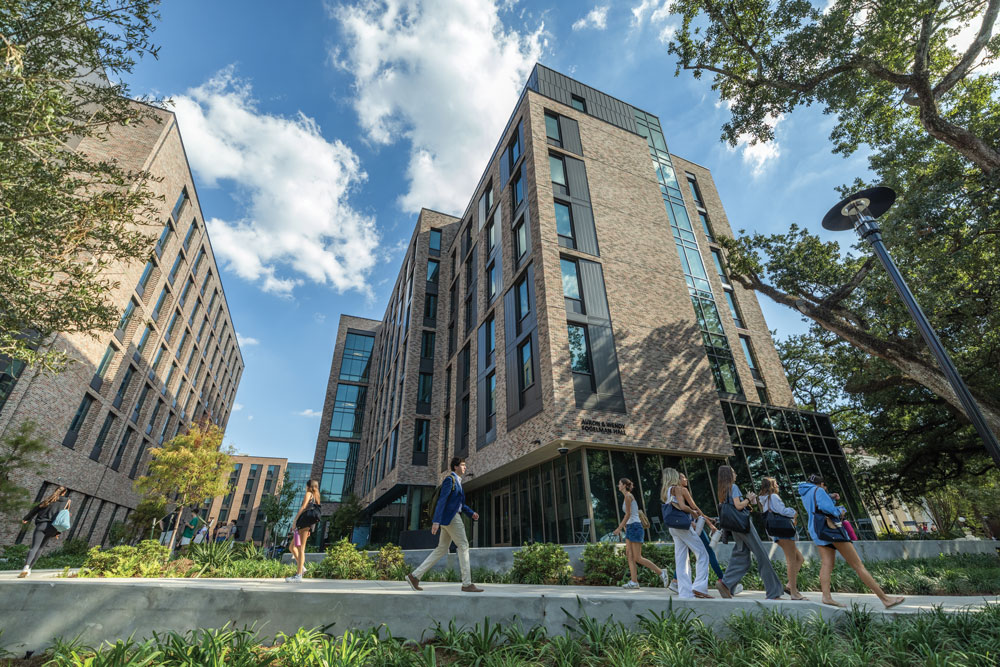
A community built for living and learning
Tulane University unveiled the new Bayou and Fogelman residence halls, adding nearly 700 beds and expanding on-campus housing to about 5,000 students for the first time in the university’s history. Part of The Village residential community, the halls feature suite-style living, study lounges, shared kitchens and faculty-in-residence programs designed to connect academic support with campus life and strengthen Tulane’s relational culture.
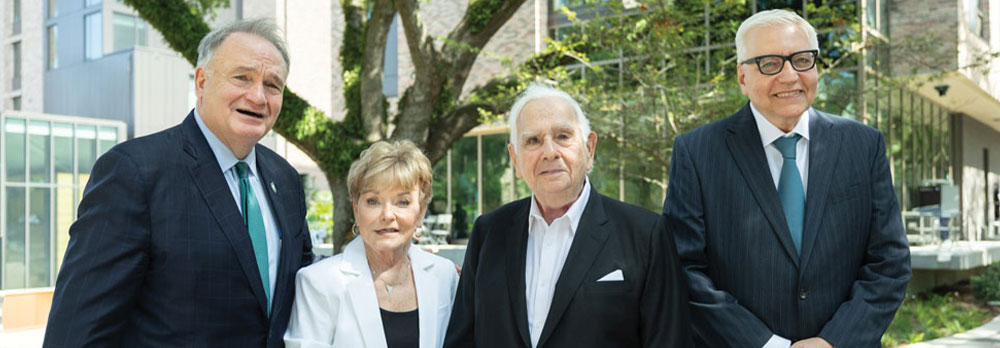
" The love Avron and Wendy Fogelman have for Tulane is palpable and infectious, and it is so fitting that their names will be forever linked to Tulane in this way. Two leaders in supporting our students’ pursuit of excellence... are now helping to create an environment for the multi-disciplined and multi-dimensional living, learning and growth of our students. "
— President Michael A. Fitts

Leading the way in culinary medicine
The Goldring Center for Culinary Medicine (GCCM) was founded in 2012 as the first teaching kitchen operated within a medical school, establishing itself as a national leader in the culinary medicine movement. As part of the School of Medicine, GCCM’s mission is to educate and train future and current physicians to understand and apply principles of nutritional medicine in a practical way. This education enables medical trainees and professionals to assist their patients with diet and lifestyle modifications that improve health. It is an approach that has expanded nationwide, with a 2026 New York Times article noting that more than 60 medical schools, residency programs and nursing schools now use a version of Tulane’s curriculum adapted by the American College of Culinary Medicine.
By the Numbers
medical students participate each year
community members participate in 6-week cooking classes
families complete free family cooking class series
Engaging in civil discourse
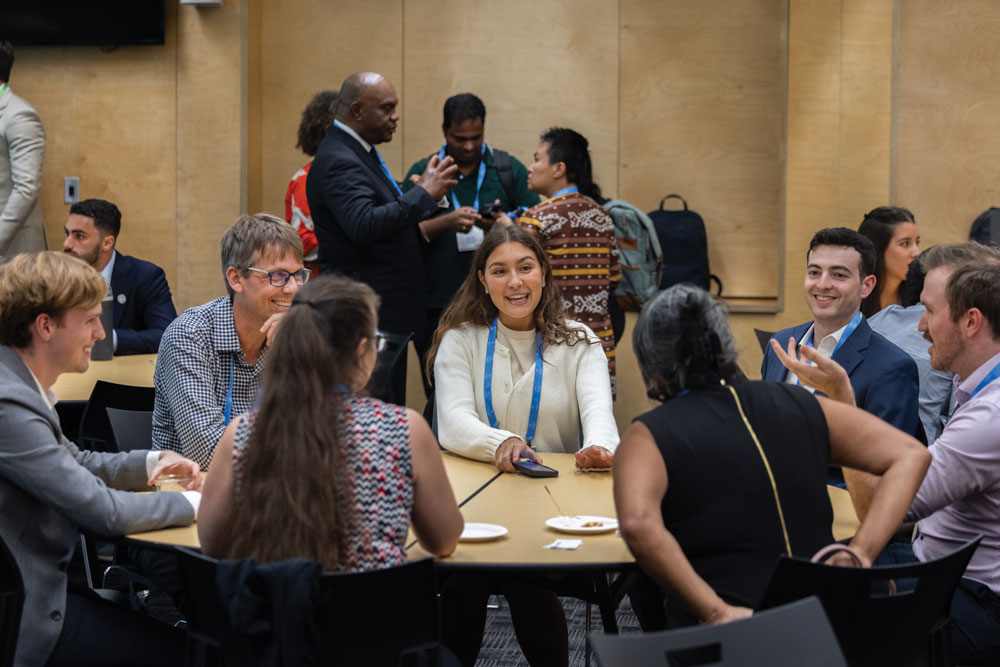
Tulane expanded its commitment to civic engagement, respectful dialogue and public service by announcing plans for a new Center for Civil Discourse. The center will support courses, workshops, nationally recognized speakers representing a broad range of perspectives, interdisciplinary research grants, a common book reading program and faculty appointments focused on civic engagement, all reinforcing academic excellence, free expression and open inquiry.
In addition to announcing the new center, Tulane’s commitment to civic engagement was also reflected in these recent highlights:
• Earning the 2026 Carnegie Elective Classification for Community Engagement, a national recognition of the university’s deep partnerships and public impact.
• Celebrating 20 years of the Center for Public Service advancing community-engaged learning and scholarship.
Showcasing impact at Tulane Day at the Capitol
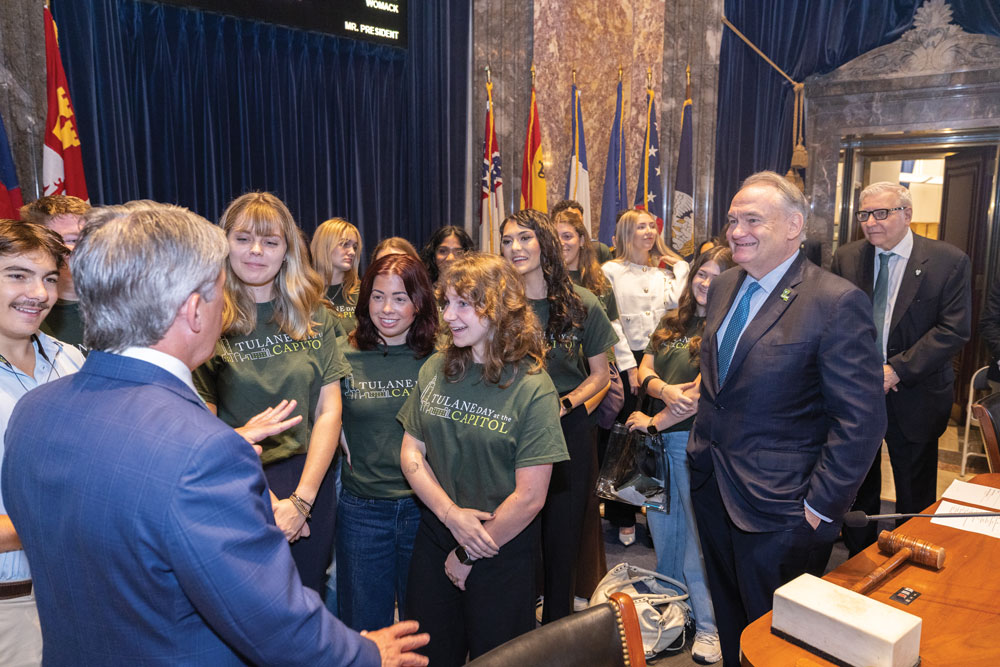
Leadership, students, faculty and staff highlighted Tulane’s contributions to Louisiana at the annual Tulane Day at the Capitol in Baton Rouge. The event showcased the university’s partnership with the state and its growing influence in research, education, workforce development and healthcare. It also celebrated Tulane’s $5.2 billion annual economic impact, which supports more than 30,000 jobs across Louisiana and underscores the university’s role in strengthening the state’s economy.

Breaking bread over the Longest Table
Hundreds of Tulanians gathered on Berger Family Lawn for the university’s inaugural Longest Table event, sharing a single table and engaging in meaningful conversations designed to foster connection and understanding. The initiative, recognized with the Association of College Unions International’s Collaborative Program of the Year Award, exemplified the university’s growing efforts to create spaces for respectful dialogue and civic participation both on campus and throughout the community.
Across the Aisle: Infrastructure and The Common Good
As part of the School of Architecture and Built Environment’s “Common Good” lecture series, Louisiana State Senators Patrick Connick (R) and Gary Carter, Jr. (D) (L ’02) joined faculty for a panel on bipartisan approaches to infrastructure. The discussion highlighted the shared roles of government, business and education in building and sustaining strong communities. Provost Robin Forman opened the event, pointing to the ways that Tulane is at the forefront of promoting civil discourse.
